Pentaport Rock Festival: a guide for music fans
A music fan's guide to Pentaport Rock Festival in Songdo, Incheon: history, dates, subway access, ticket prices and what the weekend is really like.
By Jae Park · Updated Jul 14, 2026
The first time Korea grabs you, it's usually an idol group or a drama soundtrack. Then, somewhere down the rabbit hole, you hit Hyukoh, or wave to earth, or Jang Ki-ha's dry, funny lyrics, and you realize Korea has a whole guitar-driven world that never shows up on the big televised award shows. That world has a physical home, and it's a three-day festival on a stretch of reclaimed land in Incheon called Pentaport.
I went the first time mostly to catch a couple of foreign headliners I already loved. I came home caring more about the Korean bands I'd never heard of before that weekend. If you followed Korea in through K-pop and want the messier, sweatier, more human live-music scene underneath it, this is where you find it.
How a cancelled festival became Korea's biggest rock weekend
Pentaport has one of the stranger origin stories in Korean music. It started in 1999 as the Tri-port Rock Festival, a two-day event planned for Songdo with a wildly ambitious lineup: Deep Purple, Rage Against the Machine, Dream Theater, The Prodigy. Then it collapsed before it really happened, cancelled over money and logistics. Korea's big international rock festival was a failure before it played a single note.
It sat dead for seven years. In 2006 the organizers brought it back under a new name, Pentaport, built from five ideas they wanted the festival to stand for: music, passion, environmental friendliness, DIY spirit, and friendship. That relaunch stuck. Two decades on, it's generally considered the biggest rock festival in South Korea, and one of the longest-running.
The early years were rough in a way that became part of the legend. The festival ran at an old Daewoo site in Incheon that was basically a dirt field, so when it rained, the whole thing turned to mud. And it rained a lot. In 2007 it poured for three straight days and only cleared on the final morning. That was the year the reputation set in stone: Pentaport equals rain, rain equals mud. Korean fans still half-joke that buying a Pentaport ticket is the most reliable way to summon a downpour. If you've ever seen photos of the Boryeong festival, you already understand that Koreans have a healthy relationship with getting filthy for fun, and Pentaport's early crowds leaned into it. For the full mud-as-a-feature experience, the Boryeong Mud Festival guide is a good companion read.
Despite the weather curse, the bookings got serious. Over its run Pentaport has hosted Muse, Weezer, Placebo, Fall Out Boy, Nine Inch Nails, The Strokes, plus a long parade of Japanese and Korean acts. Muse played back in 2007, the same rainy edition as L'Arc-en-Ciel. When the pandemic shut down live events, Pentaport went online in 2020 and drew something like 780,000 virtual viewers, then ran a hybrid version in 2021 before returning to a real field. The venue has since settled at Songdo Moonlight Festival Park, a purpose-built open space in Incheon's futuristic Songdo district, which is where you'll be heading.
When it happens, and confirm the dates yourself
Pentaport is a summer festival, locked to the hottest, stickiest part of the Korean calendar. It runs across a Friday-to-Sunday weekend at the turn of July into August, every year. The 2026 edition, for example, is set for July 31 to August 2. Performances typically run from late morning until around 10 p.m. across multiple stages, so a single day is a genuine twelve-hour marathon if you want it to be.
Because the exact weekend shifts a little each year, do not trust a date you read in an old blog post, including this one after a while. Check the official site at pentaport.co.kr before you book flights or hotels. That's not me covering myself; lineups and even the precise dates get confirmed in stages, and the final acts often land only a month or two out. If you're planning a broader trip around it, our Korea summer festivals guide lays out how Pentaport fits alongside the other July and August events so you don't accidentally schedule two on the same weekend.
Getting to Songdo Moonlight Festival Park
Here's a piece of good luck for international fans: the festival is in Incheon, which is where your plane almost certainly lands. Songdo sits close to Incheon International Airport, so you can, in theory, fly in and be near the venue faster than you'd reach central Seoul.
The venue's address is 350 Central-ro, Yeonsu-gu, Incheon. The cleanest way in is the subway. Incheon Subway Line 1 has a station literally named Songdo Moonlight Festival Park, which opened in December 2020 and is the last stop on the line. Take Exit 4 and it's roughly a 13-minute walk to the main stage. The park sits between that terminus and International Business District Station, so either works if the crowds bunch up at one exit.
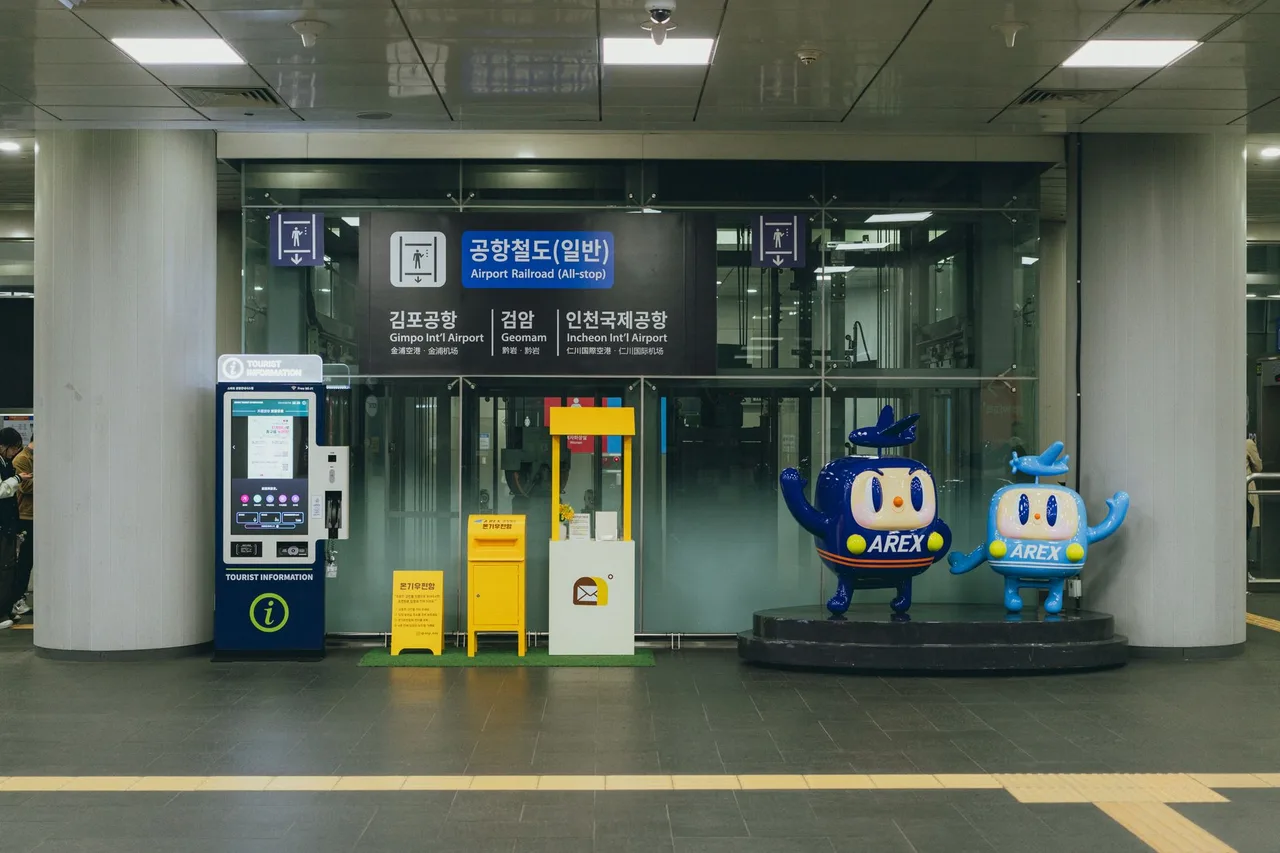
Coming from Seoul is very doable as a day trip, though it's not quick. You'll transfer from the Seoul metro system onto Incheon Line 1, and the whole door-to-door haul from central Seoul runs well over an hour, sometimes closer to ninety minutes depending on where you start. On festival nights the trains back get packed the moment the headliner finishes, so I'd rather miss the last two songs than stand crushed on a platform. If you're flying in specifically for this and going straight from the airport, the Incheon Airport to Seoul guide covers the transport passes and cards that also work on the Incheon line.
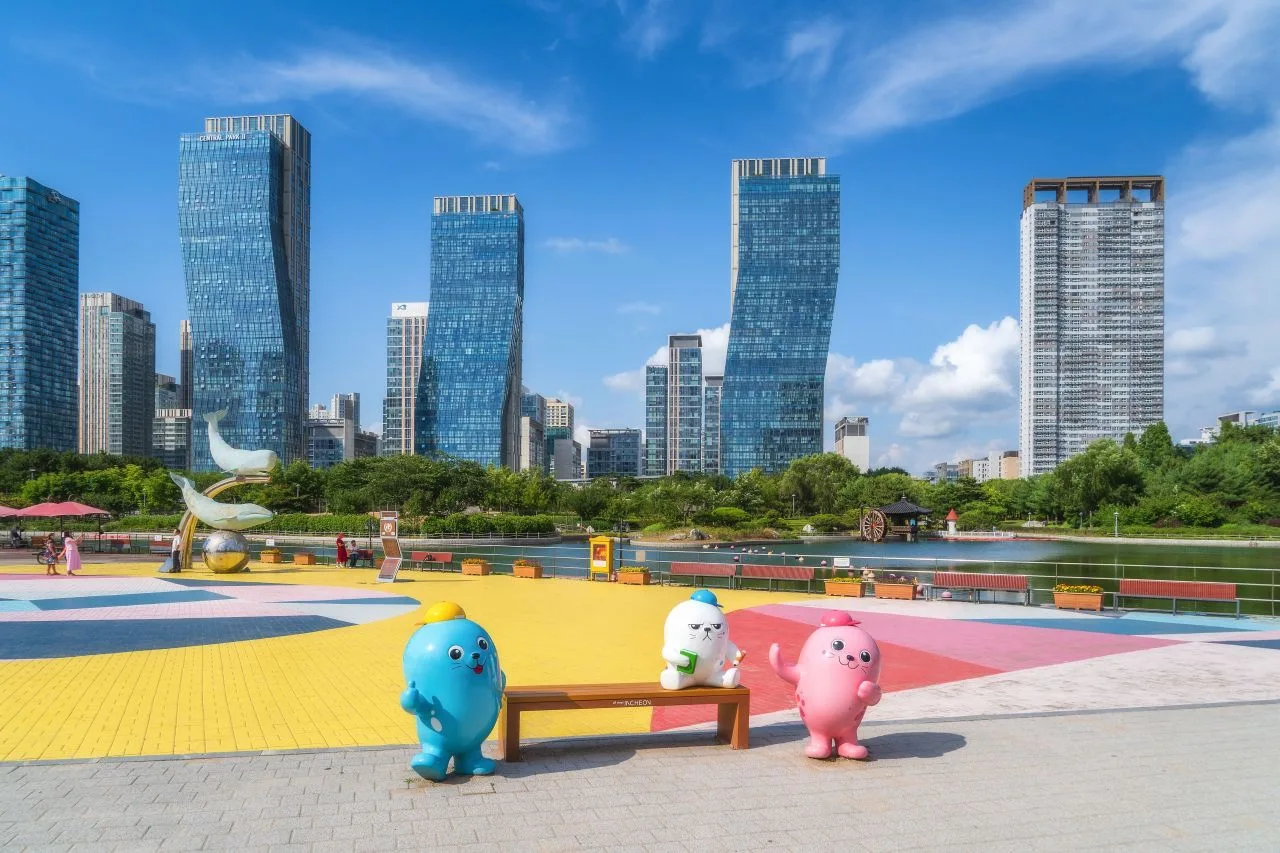
One quiet advantage of the Songdo location: it's a planned city of wide boulevards, tall towers, and Central Park, so there's real infrastructure around the venue. Convenience stores, cafes, and actual hotels are within walking distance, which is not something you can say about every field-in-the-middle-of-nowhere festival.
What tickets cost and how to buy them in English
Pentaport is a paid festival, and pricing has stayed fairly consistent. For 2026 the tickets ran around 240,000 won for a full three-day pass and 120,000 won for a single day. That's roughly the going rate for a major music festival anywhere, and cheap compared to the equivalent weekend in the US or UK. Card promotions come and go; the 2026 run offered about 15 percent off when you paid through a specific Korean card partner, which is nice if you have access to it and irrelevant if you don't.
The practical hurdle for visitors is that a lot of Korean ticketing runs through domestic platforms that assume a Korean phone number and resident registration. Official sales for recent years have gone through NOL Ticket (formerly Interpark), and international resellers like Klook, KKday, and Trazy usually list Pentaport passes too, often with an English checkout and a simpler payment flow. You'll sometimes pay a small markup for that convenience. If the whole Korean ticketing system feels opaque, our walkthrough on buying Korean performance tickets in English explains which platforms accept foreign cards and how to dodge the phone-verification wall.
Buy early for the good headliner days. Single-day tickets for the strongest night can sell out while three-day passes are still floating around, so if there's one specific band you're crossing an ocean for, lock that day down first.
The lineup is the whole point, and it's beautifully mixed
What I love about Pentaport is that it refuses to pick a lane. A single edition will stack legacy international acts next to hard modern names next to the Korean indie bands that are the real reason to fly over.
Take the 2025 edition as a snapshot: 58 acts across the weekend, headlined by Britpop survivors Pulp, alternative rock's Beck, and Japan's Asian Kung-Fu Generation. Around them sat the blackgaze band Deafheaven, bedroom-pop-turned-rock star beabadoobee, and a deep bench of Korean names: Jang Ki-ha, a Hyukoh set paired with Taiwan's Sunset Rollercoaster, and veteran garage rockers Galaxy Express. That's the Pentaport formula in one line: a band your dad loves, a band that soundtracks a viral edit, and a Korean band you'll be streaming on the flight home.
For hallyu fans, the Korean side of the bill is the actual discovery engine. Hyukoh broke wide partly through Korean variety TV and then quietly became one of the country's most respected exports. Acts like these are why people who arrived via K-pop end up staying for K-indie. Pentaport also runs a Super Rookie program that gives a handful of unsigned bands a real festival slot; in 2025 that pipeline pushed forward artists like singer-songwriter Milena, who had toured North America opening for wave to earth. If you want to say you saw someone before they blew up, the early-afternoon rookie stages are where it happens. And if this festival is your gateway into wanting more, the guide to experiencing the K-pop industry in Seoul covers the more polished, idol-driven side of the same music economy.
The through-line runs back to Hongdae, Seoul's scrappy university-district live scene where most of these Korean bands cut their teeth in tiny basement clubs. Pentaport has historically staged warm-up shows there before the main weekend, so a music-nerd trip could reasonably start in a 100-capacity Hongdae room and end on a festival field in Songdo.
What it's actually like on the ground
Two words: it's hot. Early August in Incheon is brutal, humid, coastal heat, and the festival sits on open reclaimed land with limited natural shade. The crowd copes the Korean way, which is with tents. You'll see the field carpeted with pop-up sun shelters that people camp under between sets, and the organizers usually provide some air-conditioned indoor rooms as a heat-escape valve. Bring or rent a small tent if you can, and treat sunscreen and water as non-negotiable rather than optional.
The rain reputation still hovers over the place, even though the modern Songdo site drains far better than the old dirt field. Pack a cheap poncho, not an umbrella; nobody wants your umbrella spokes in a crowd, and security often won't let them in anyway. If it does pour, lean into it, because a soaked Pentaport crowd is a genuinely joyful thing.
Food and drink are handled well. There's a proper food zone and beer stalls, and prices are reasonable by festival standards. The atmosphere is broad rather than aggressive: there's a mosh pit up front for the fans who want it, but most people hang back, sit on the grass, and drift between stages. I've seen couples in their sixties there next to twenty-year-olds in band shirts, and nobody looks out of place.
A few concrete things I'd tell a first-timer. Bring a portable fan and a battery pack, because you'll be filming and your phone will die in the heat. Carry some cash even though Korea is deeply card-friendly, as a backup for small vendors. Wear shoes you can destroy. Decide in advance where you sleep. Songdo is calm and close to the site. Seoul is livelier but adds an hour of transit at both ends of a very long, sweaty day. I've done both; Songdo wins if a headliner ends late.
Learning even a little Korean smooths the whole thing, from ordering a beer to asking which stage a band is on. A handful of phrases genuinely changes how the weekend feels, and the survival Korean phrases guide has enough to get you fed, watered, and pointed toward the right stage.
Is it worth flying in for?
If your image of Korean music stops at glossy idol choreography, Pentaport rearranges it. This is the country's rock heart, kept alive through a cancelled first attempt, a seven-year gap, years of mud, and a pandemic that pushed it online. The bill mixes global names you already know with Korean bands you're about to. You'll sweat, you'll probably get rained on, and you'll walk out with a new favorite band whose name you can't yet spell. For me that's the best possible souvenir, and it's a lot cheaper than another suitcase of skincare.
Location
Songdo Moonlight Festival Park, Incheon
View on Google MapsSources
This guide was researched using the references below. Prices and times change, so confirm anything time-sensitive on the official page before you rely on it.
Related guides
- Busan International Film Festival: A Visitor's GuideYour comprehensive guide to attending the Busan International Film Festival, including dates, venues, ticketing, and travel tips.
- Korean movies to watch in 2026Explore the standout Korean films of 2026, from historical dramas to innovative thrillers, and discover the industry's evolving trends.
- Korean dramas in 2026: top picks and trendsExplore the standout Korean dramas of 2026, from high-rated series to emerging trends and must-watch titles.
- K-pop groups: a guide for international fansAn in-depth look at the most influential K-pop groups in 2026, their achievements, and the evolving landscape of the genre.
- KPop Demon Hunters: what the record-breaking film got rightThe 2025 Netflix film became the platform's most-watched title and won Best Animated Feature. What it borrowed from real K-pop, and what to watch next.
- Where to buy K-pop albums, photocards, and merch in SeoulA comprehensive guide to the best places in Seoul to purchase K-pop albums, photocards, and merchandise, including major record stores, entertainment compa